
Glassine by Siopack®: The future has no window – it is one
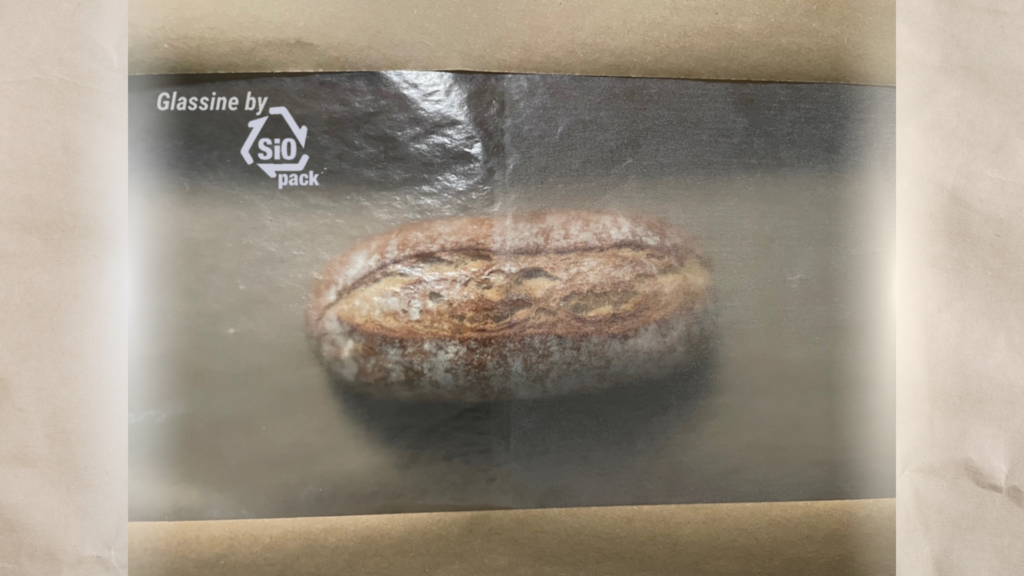
How an inconspicuous type of paper replaces plastic display packaging – a technology with signal effect for the entire industry. The era of paper packaging with plastic windows is coming to an end. What long seemed like a sustainable solution turns out, on closer inspection, to be a problem: a material mix, non-recyclable, technically outdated. Now comes the alternative – of all things, from a long-familiar, hitherto underestimated material: glassine. Glassine by Siopack® is a multi-effective barrier coating for which a patent application has been filed. In combination with conventional glassine paper, this creates for the first time a paper-based display packaging material that is highly transparent, protective and fully recyclable.
A Revolution in the Preservation of Cultural Heritage and Energy Efficiency
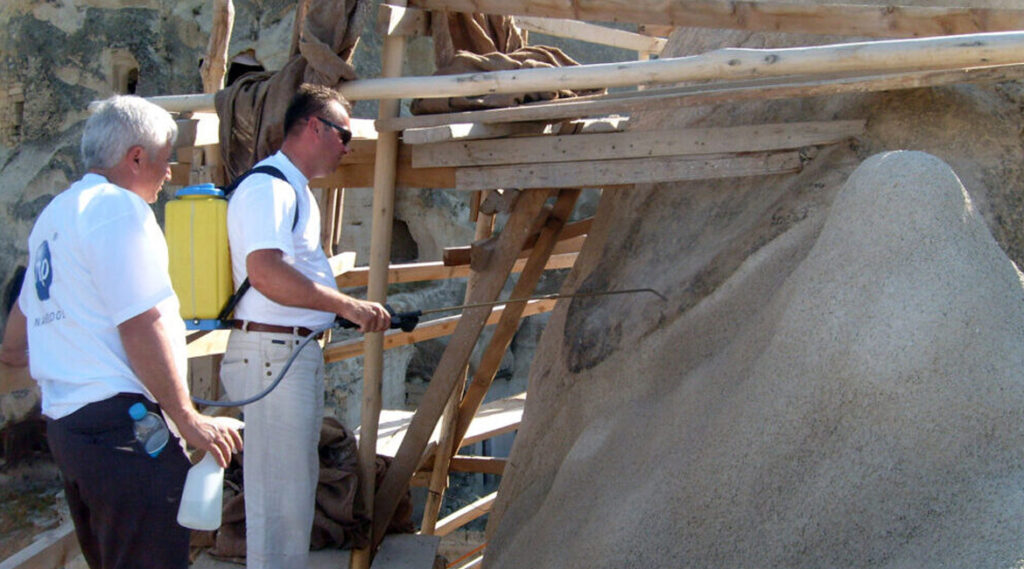
New Delhi – The internationally recognised NP® technology from Nanopool GmbH protects historical sites from moisture and weathering and has also shown impressive results in renewable energies – now coming to India with training and certification for the next generation of technicians.
Top Honour at the Green Product Award for PE-Free Paper Packaging
Hülzweiler, June 2022. At a festive award ceremony in Munich, the Green Product Awards were once again presented to products and services that stand out in terms of design, innovation and sustainability. The prize in the jury category “Best of New Materials” went to the environmentally friendly barrier coating NP® SiOPack® from Nanopool GmbH. The innovative solution enables the production of PE-free, compostable and recyclable packaging for direct food contact. Food safety without plastic content: The long-standing challenge of combining sustainability and safety in the packaging industry is a thing of the past! Until now, natural-fibre-based packaging solutions could only achieve sufficient packaging and food safety in demanding applications with the help of coating materials such as polyethylene (PE) or bio-PE. Coating with the innovative solution NP® SiOPack®, for example, achieves the same values in terms of water stability and food safety on cardboard packaging as a PE coating, but as a nature-based product it can be fully returned to the natural cycle. The multi-award-winning solution from Nanopool thus succeeds in resolving the supposed contradiction between environmental friendliness and product safety. Technologically sophisticated application for cardboard packaging: For the technical implementation, Nanopool found the ideal support in Van Genechten Packaging (VGP), the pioneer of sustainable coatings. The European manufacturer of cardboard packaging, headquartered in Belgium, has particular expertise in food packaging and has been working on new sustainable solutions and technologies for years. Together with its experts, the company developed the machine-based implementation of the coating of cardboard packaging for industrial production. In practical application at VGP, the material is coated with NP® SiOPack® and can then be easily processed further for any packaging application. “An excellent, more sustainable technology”: This year’s jury of the Green Product Award also recognised the particular relevance of this environmentally compatible coating for food packaging, describing NP® SiOPack® as “an excellent, more sustainable technology for paper and disposable products” that also makes it easy for consumers to intuitively recognise that packaging with this natural coating is recyclable and compostable. The ultra-thin barrier is neither visible nor tangible to the naked senses, which is why packaging made of paper, cardboard or other natural fibres treated with NP® SiOPack®, unlike PE-coated products, cannot be distinguished visually or haptically from the untreated raw material. The effect of the NP® SiOPack® finish, however, is clearly recognisable: absorbent natural materials become reliably repellent to water, oil and grease, dirt and even germs. The result is safe packaging for dairy products, liquids, frozen products, soaps and detergents and much more, which can simply be disposed of with waste paper after use and does not burden nature even when the human factor strikes and someone improperly discards their packaging in the woods. Quick implementation for packaging manufacturers: The fact that coating with NP® SiOPack® can be integrated into existing production processes for packaging manufacturers, both on the finished packaging product and during industrial production, makes the barrier coating a practical solution that is being positively received by customers who are increasingly aware of sustainability. This practical relevance was one of the points that the experienced jury of the Green Product Award rated particularly positively. Together towards the goal of sustainability: Since 2013, the international Green Product Award, in cooperation with the […]
A revolutionary breakthrough for the packaging industry
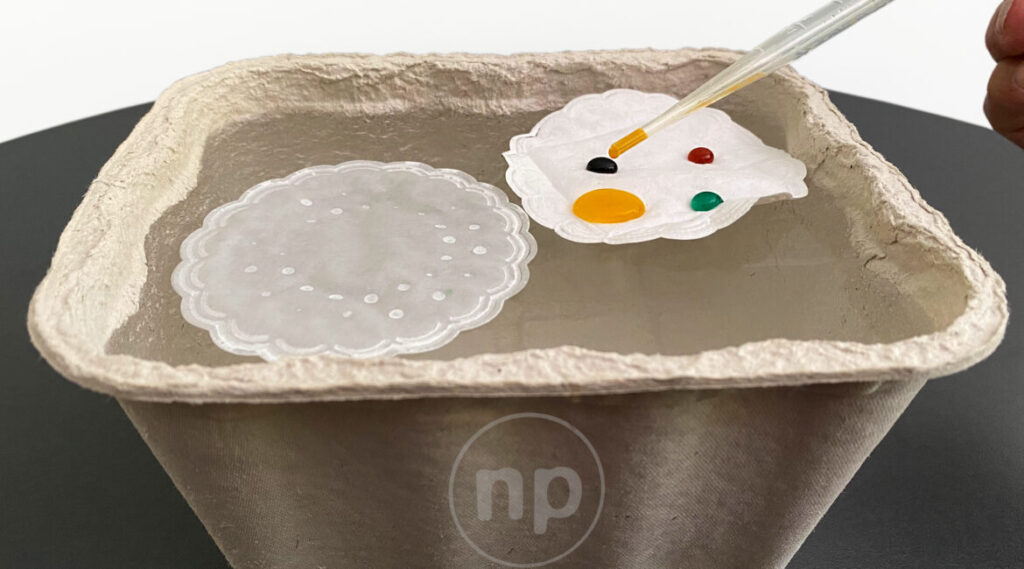
International finance and business magazine CFI honors NP® Liquid Glass technology as Europe’s “Best Green Alternative Innovation 2020” London, UK / Schwalbach, Germany. July 30, 2020 By its own account “without hesitation”, the jury of Capital Finance International (CFI) named Nanopool GmbH, with its unique NP® Liquid Glass technology for ultra-thin protective coatings, the winner of the “Best Green Alternative Innovation Europe 2020” award. Particular emphasis was placed on the “revolutionary breakthrough” in the field of environmentally friendly packaging: the sustainable NP® technology gives biodegradable materials such as paper and cardboard water- and oil-repellent properties, and additionally offers, among other things, mold- and odor-repellent protection – and, in the future, even antiviral protection. Its effectiveness against the SARS-CoV-2 pathogen has already been confirmed by medical technology researchers as part of an interdisciplinary series of studies. Cardboard as the new super-packaging: The NP® protective coating makes it possible Until now, the possible uses and design of paper-based packaging have been severely limited by the respective properties of the necessary protective coating. The NP® Liquid Glass technology, on the other hand, offers flexibility in two respects: Firstly, NP® Liquid Glass can easily be applied to packaging of any size and shape, giving cardboard manufacturers unprecedented freedom in the design of their products. Secondly, the functionality of the ultra-thin protective layer can be continuously extended: until a few months ago, it was primarily the repulsion of moisture, grease, odors and gases that posed challenges for manufacturers of sustainable paper and cardboard packaging. Since the COVID-19 pandemic, the adhesion of viruses has become an additional problem. To meet this market development, Nanopool GmbH has successfully had a virus protection tested for its effectiveness against the SARS-CoV-2 pathogen and will in future be able to embed it into the existing NP® product matrix without having to make any changes to the rest of the coating process. “It’s a bit like a smartphone,” explains Sascha Schwindt, Managing Director of Nanopool GmbH, describing the principle. “Just like a smartphone in its factory state, our base matrix is already highly versatile. It gives surfaces superphobic properties that prevent moisture, dirt and microorganisms from adhering stubbornly. Incidentally, appearance, feel and breathability are not affected. But just as a smartphone becomes even more customizable through apps, we can extend our base product with a wide variety of active agents. This makes our solution exceptionally versatile and flexible. An important market advantage – after all, who knows what unexpected requirements the future will bring!” This means nothing now stands in the way of the packaging industry opening up entirely new applications. At the same time, NP® Liquid Glass equips companies for the pressing environmental situation and the related legal requirements: Plastic-free and environmentally friendly: back into the natural cycle after use Conventional coating processes turn inherently biodegradable paper into composite materials by adding metals or plastics such as aluminum or polyethylene (PE), which then have to be disposed of separately. The versatile NP® Liquid Glass coating, on the other hand, is based on silicon dioxide, SiO2 for short, a completely harmless element found in nature in quartz sand. This means that any packaging that is biodegradable per se can be easily recycled even after coating. In view of constantly rising consumer demands regarding the sustainability of products and increasingly strict regulations in the fight against plastic, this is a clear advantage for every manufacturer, whether […]
Nanopool® honored with “Die grünen Helden®” as GREEN BRAND Germany 2018/2019
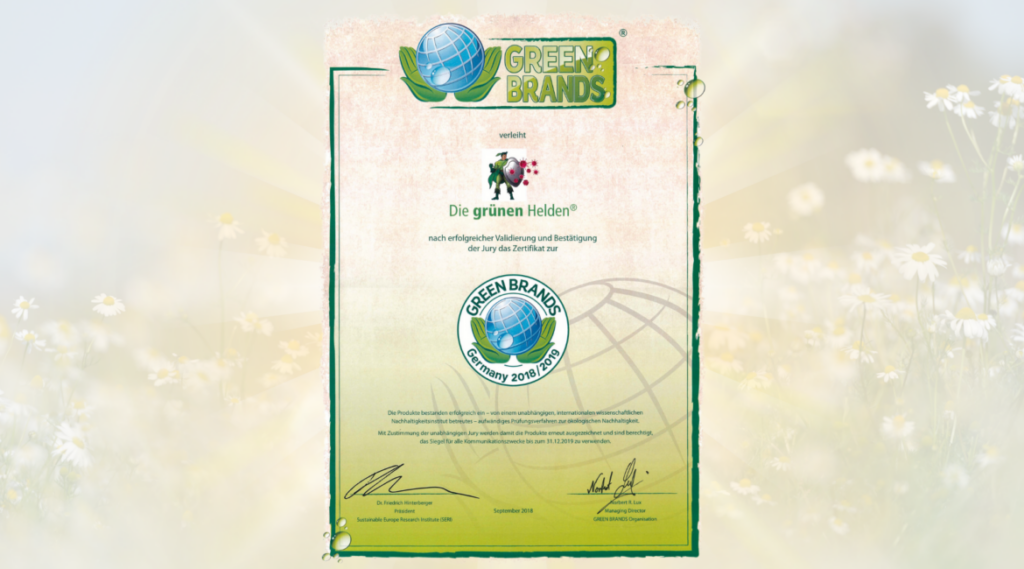
A highlight for nanopool® GmbH at the BIOFACH 2019 trade fair: the globally novel water-saving household product series “Die grünen Helden®” (the Green Heroes) received the GREEN BRANDS Germany award for the first time. At the world’s largest organic trade fair in Nuremberg, Saskia and Sascha Schwindt received the certificate from Norbert Lux, initiator and managing director of the GREEN BRANDS Organisation. GREEN BRANDS honors everyday brands that have anchored a responsible approach to nature in their working and production methods.
Nanopool GmbH Significantly Expands Its Presence in Asia

Major corporation Aitken Spence introduces the special technology from Saarland in Sri Lanka: through a strategic partnership, Nanopool GmbH is massively expanding its presence in Asia – with surface refinement for healthcare, textiles and many other sectors.
Hope in the Fight Against Dangerous Hospital Germs
A microbiologist sees a “significant contribution” of the Bacterlon technology in protecting against pathogens: studies in Germany and Canada confirm germ reductions of up to 95 percent on treated surfaces – hope in the fight against dangerous hospital germs.
Study confirms significantly fewer germs on “Bacterlon®”-treated surfaces at the AWO senior care center.
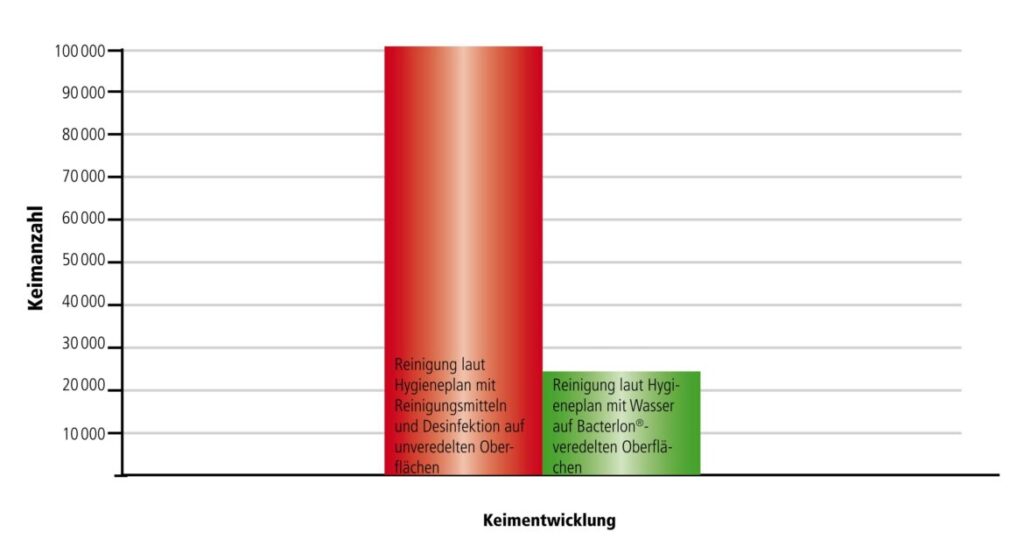
Nalbach. The Saarland-based company nanopool has developed a process for “refining” germ-prone surfaces in care homes for the elderly with an ultra-thin glass film. Vulnerable people in particular could thus be better protected against contagious diseases. The results of a microbiological study at the AWO senior residence Primsmühle in Nalbach give cause for hope: the number of pathogens on surfaces previously treated with the nanopool product “Bacterlon®” – such as floors, furniture, door handles, light switches and handrails – was reduced significantly, in some cases by up to 95 percent. “Infections are of particular importance in care homes for the elderly,” said Saskia Schwindt of nanopool at the presentation of the study. Communal living always poses a risk of germ and infection transmission. “For a healthy person, this is usually not a problem. For older or weaker people, however, it can pose a risk of illness.” In addition, the number of persistent germs such as MRSA continues to rise. The norovirus, which repeatedly strikes care homes in autumn and winter, is also a danger. The tiny viruses can survive for up to six weeks on door handles, upholstery and other surfaces. “That is why it is very important to prevent the spread of bacteria while they are still in the colonization phase, so that they cannot multiply.” This insight prompted the AWO regional association of Saarland to take an innovative step. Encouraged by the initiative of Saarland’s Health Minister Georg Weisweiler to combat the MRSA pathogen, the association agreed to launch a trial together with nanopool at the senior residence in Nalbach. “We wanted to see whether it was possible to further improve our hygiene measures with the help of nanopool,” said Paul Quirin, chairman of AWO Saarland. In the spring, numerous surfaces in the senior residence were coated with “Bacterlon®” by certified nano-technicians. Initial so-called contact plate tests were encouraging: the germ load on the treated surfaces had dropped by almost half, even though the cleaning staff – as specified by nanopool – used only warm water for cleaning. The next step was to obtain conclusive certainty. For twelve weeks, from the beginning of September to the beginning of December, everything was systematically checked at regular intervals and the samples were analyzed in the laboratory, under the professional supervision of independent microbiologists. “The results of the study have confirmed our expectations,” says a delighted Saskia Schwindt. After all, nanopool can also draw on this experience elsewhere. The innovative product of the Schwalbach-based company, which operates throughout Europe, is used, for example, in hospitals in England as well as in the SHG clinics. For AWO administrative director Wolfgang Hermann, the advantages are obvious. “The residents of the senior residence stay healthy longer and consequently need to go to hospital less often.” And several percent could be saved on the cost of cleaning agents. AWO is now considering using the Bacterlon® technology in other of its senior care homes as well. About the company: Nanopool® GmbH, headquartered in Hülzweiler, is an innovative family-owned company. Since 2001, it has been among the companies working with nanotechnology in the field of surface refinement. Nanopool® has succeeded in developing a surface refinement solution for almost every field of application. This innovation will positively change working life in a wide variety of ways. All Nanopool® products are based on the latest scientific findings from nanotechnology research. The effectiveness of the environmentally friendly, food-safe products has been tested by recognized research laboratories and […]
Tauern Tunnel Coated with “NP® Liquid Glass Technology”
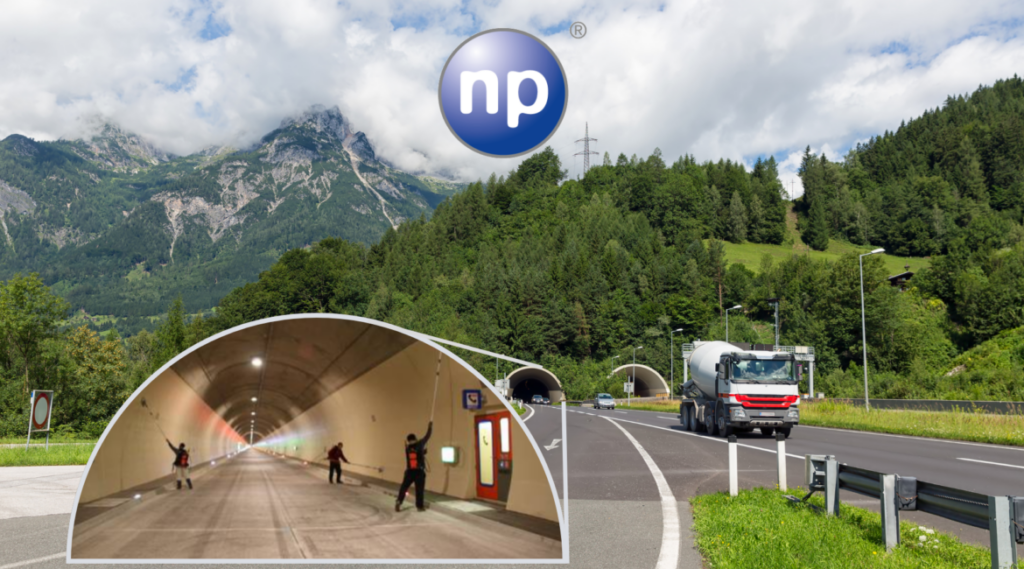
Innovative protective layer demonstrably reduces cleaning costs and increases road safety. Hülzweiler/Austria. The old tube of the Tauern Tunnel has reopened after refurbishment! For faster and more effective cleaning and for protection against environmental influences, several thousand square metres of the tunnel wall in the south tube were coated with NP® Liquid Glass Technology. Work on the north tube, carried out by the Nanopool company from Salzburg, is also scheduled for completion by the end of October. ASFINAG GmbH has been successfully using Nanopool®’s “liquid glass” to reduce costs on tunnel walls since 2007. NP® Liquid Glass has already been applied in the Bruck an der Mur area at the Tanzenberg Tunnel and the Massenberg Tunnel, and at the tunnels in Kirchdorf, both on the epoxy coating and on the inner concrete shell. Applying the NP® Liquid Glass system to the tunnel walls in the Tauern Tunnel: The technology is applied to the tunnel walls using pressure vessels. This creates an ultra-thin film of liquid glass that settles into even the smallest crevices, thereby preventing the penetration of dirt and water. Dirt adhesion is drastically reduced, which in turn cuts down on time-consuming cleaning phases. The operator saves considerable costs, and in addition this NP® Liquid Glass Technology makes a lasting contribution to road safety and the environment. Cleaning no longer requires chemical cleaning agents but only water, and the water pressure could also be reduced from 130 to 30 bar. The cleaning interval was reduced from twice a year to a single cleaning. As a result, all traffic only needs to be diverted once a year for cleaning operations, which is also associated with considerable indirect costs.
Frost & Sullivan Award Recognises Nanopool’s Innovative Liquid Glass
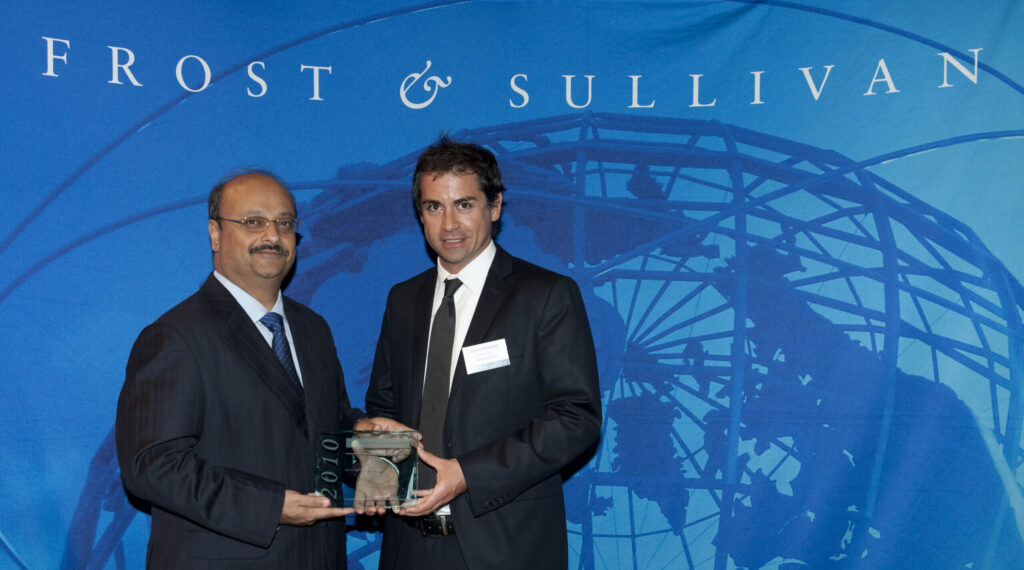
Nanopool’s antibacterial nano refinement combines safety with high disinfecting properties. London, 18 May 2011. The Frost & Sullivan Award for New Product Innovation in Europe in the field of antibacterial nano refinements was presented to Nanopool GmbH in London, in recognition of its innovative Liquid Glass product. The product offers an effective solution to the industrial demand for a safe antibacterial layer that can be conveniently applied to any surface.