
Sustainable Truck Cleaning in the Fleet: Clean Vehicles – Even After Three Years
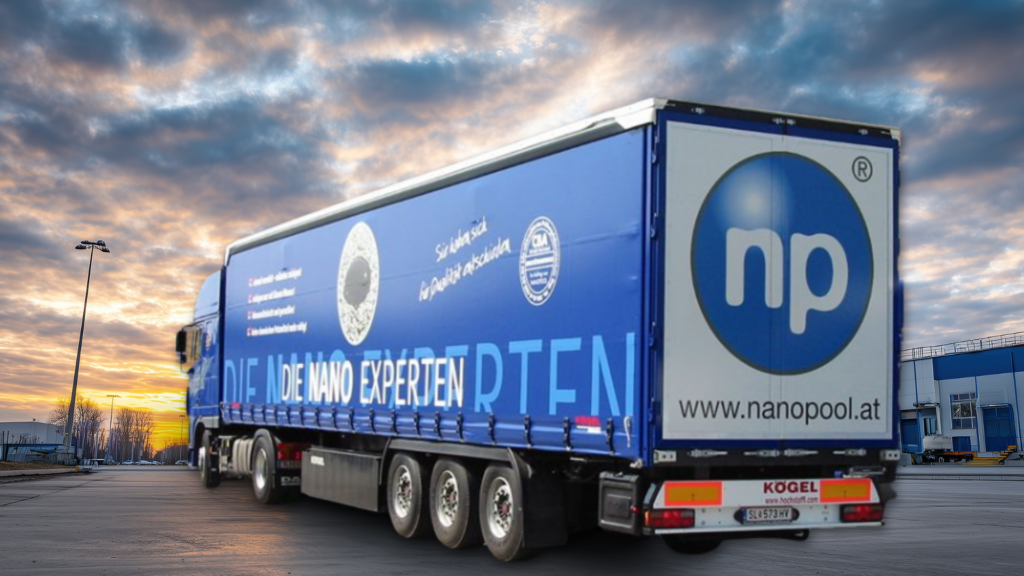
“Our truck looks as clean in daily operation as it does in the photo – not just right after washing. Even after three years, we clean our vehicles mainly with plain water. In many cases, rain alone is enough to rinse dirt off the treated surfaces. For us as a logistics company, this is not a side effect but a decisive economic and organizational advantage.” This is how a customer from the logistics sector describes it. Starting point: high cleaning effort in day-to-day logistics Trucks are exposed to extreme stresses all year round: road salt in winter, road dirt and fine dust, industrial deposits, oil and diesel residues, weather influences. Tarpaulins, superstructures and driver’s cabs in particular quickly show heavy soiling. Without suitable protective measures, this leads to frequent cleaning intervals, high water consumption, regular use of chemical cleaners and additional labor time. In a larger fleet, these factors add up considerably. Technical approach: surface treatment with a long-term effect Treating the exterior surfaces creates a modified surface structure that significantly reduces the adhesion of dirt particles. Cleaning is carried out mainly with plain water; chemical cleaners are only needed for heavy, exceptional soiling. Decisive added value: consistent effect over three years After three years of regular use – including winter operation – no noticeable reduction in the protective effect was detected. This results in permanently reduced cleaning times, lower consumption of cleaning agents, water savings and less material stress on the surfaces. Hygiene in the driver’s cab, cost-effectiveness and sustainability round off the benefits for modern fleet management.